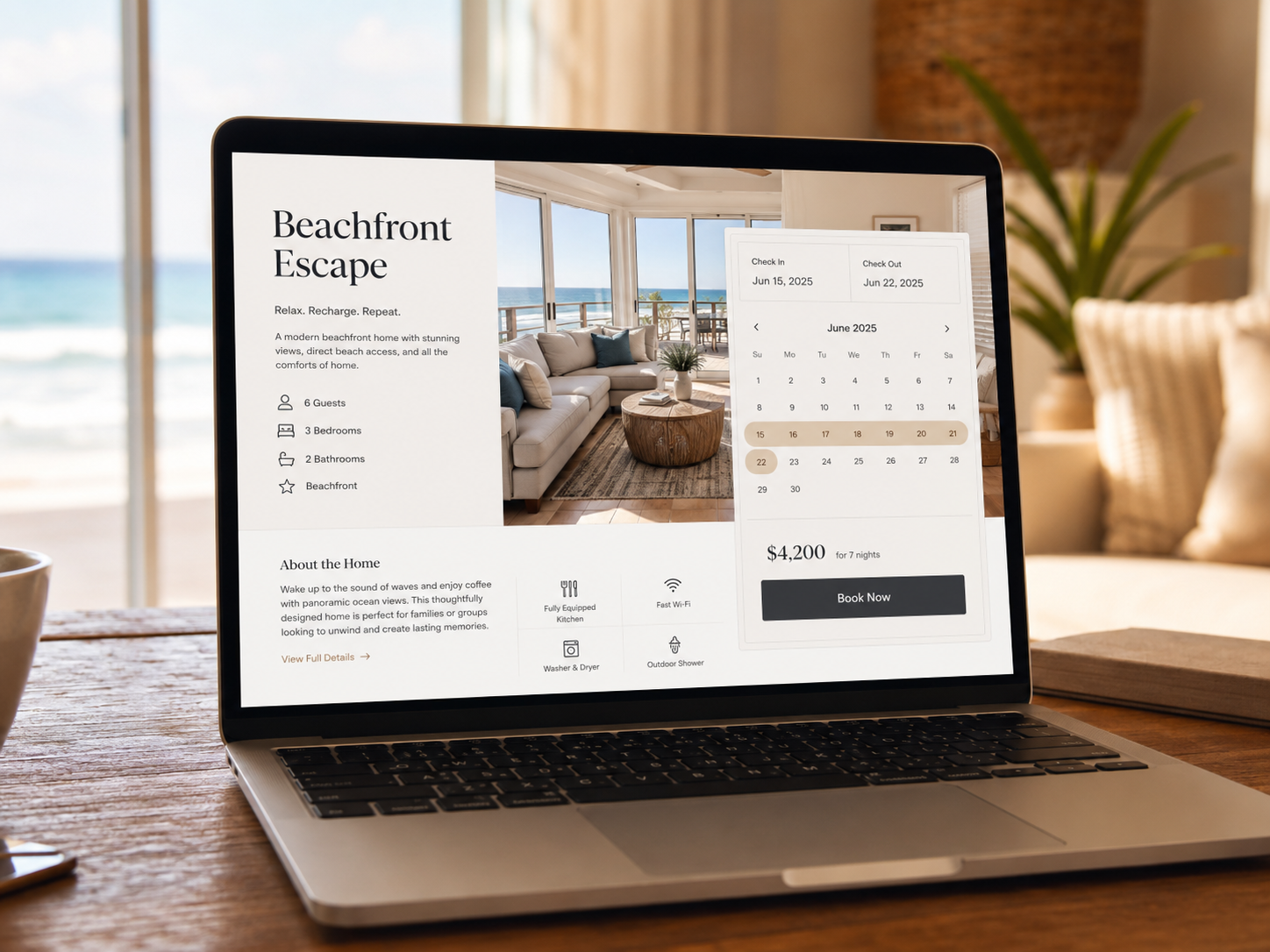
If you have ever watched a 15% commission disappear from a reservation the moment a guest clicked “book” on Airbnb, you already understand why so many hosts are turning to direct booking software. Direct booking software gives short-term rental hosts the tools to build their own branded website, take secure payments, and manage reservations without paying a platform a cut on every stay. In 2026, with OTA fees climbing and guests increasingly comfortable booking directly from a host’s own site, choosing the right direct booking software is no longer a nice-to-have. It is becoming a core part of running a profitable vacation rental business.
This guide walks through what direct booking software actually does, the best tools on the market right now, and how to decide which one fits your portfolio, whether you manage one cottage or fifty units across multiple cities.
What Is Direct Booking Software, Exactly?
Direct booking software is any tool that lets a host accept reservations outside of OTAs like Airbnb, Vrbo, or Booking.com. Most solutions bundle three things together: a booking-enabled website, a secure payment processor, and a calendar that syncs with your other listing channels so you never get double-booked.
The best direct booking software does more than just host a pretty page. It should integrate with your property management system (PMS), automatically update availability in real time, and support upsells like early check-in, late checkout, or airport transfers. Without that integration, you are stuck manually updating calendars across five different tools, which defeats the entire purpose.
Why Direct Booking Software Matters in 2026
OTA commissions have not gotten any cheaper. Airbnb and Vrbo both take a meaningful cut from every booking, and according to industry research from Skift Research, direct bookings can carry total transaction costs of well under half what OTAs charge once you account for host service fees and guest service fees combined. That gap adds up fast across a full season of bookings.
There is also a guest-loyalty angle. A returning guest who books through your direct channel costs you nothing in commission and gives you their email address, which means you can market future stays, seasonal discounts, or referral incentives directly. Data from AirDNA shows repeat and referral bookings are an increasingly important revenue source for professional hosts, and direct booking software is the mechanism that captures that value instead of handing it back to a marketplace.
Best Direct Booking Software Options for Hosts
Hostaway
Hostaway is best known as an all-in-one property management system, but its built-in direct booking website builder is one of the strongest reasons hosts choose the platform. You get a fully customizable, SEO-friendly booking site, integrated payment processing, and real-time calendar sync across every channel you list on. Because the website pulls directly from the same PMS that manages your reservations and guest communication, there is zero risk of the kind of double-booking that plagues hosts juggling separate direct booking software and PMS tools. If you are managing multiple properties and want direct booking software baked into a broader operations platform, try Hostaway free.
Guesty
Guesty takes a similar all-in-one approach, pairing its PMS with a direct booking engine and a flexible website builder that supports multiple languages and currencies, which matters if you host international guests. Guesty’s direct booking software also includes upsell tools at checkout, so you can offer add-ons like early check-in or pet fees without a separate app. For larger portfolios that need enterprise-grade reporting alongside their direct booking tools, check out Guesty here.
Lodgify
Lodgify is a popular standalone choice for hosts who want direct booking software without committing to a full PMS migration. It offers drag-and-drop website building, a built-in booking engine, and channel manager functionality, making it a solid middle ground for smaller operators who are not ready for an enterprise platform but still want a professional booking site.
OwnerRez
OwnerRez is favored by detail-oriented hosts who want granular control over trust accounting, guest agreements, and damage protection, alongside its direct booking website tools. It is less flashy than some competitors but is known for reliability and deep customization, especially for hosts managing properties across multiple owners.
Smoobu
Smoobu offers an affordable entry point into direct booking software, bundling a channel manager, booking website, and basic automation features. It tends to suit hosts with one to a handful of units who want to dip a toe into direct bookings without a big monthly commitment.
How to Choose the Best Direct Booking Software for Your Portfolio
Not every host needs the same direct booking software. A single-unit host renting out a guest cottage has very different needs than someone running thirty units across three cities. Before committing, weigh these factors:
Integration with your PMS. The best direct booking software syncs natively with your property management system so calendars, rates, and guest data flow in one direction without manual updates.
Payment processing fees. Compare the transaction fees baked into each tool. A low monthly subscription with high payment processing markups can end up costing more than a pricier plan with lean transaction fees.
SEO and design flexibility. Your direct booking website is competing with OTA listings for search visibility, so look for software that lets you customize meta tags, page speed, and mobile layout rather than locking you into a generic template.
Upsell and guest communication tools. Direct booking software that supports automated upsells and guest messaging at the point of booking tends to recoup its cost quickly through higher average booking values.
If you are still narrowing down your overall tech stack, our guide on how to choose vacation rental PMS walks through the broader decision beyond just the booking website itself.
Direct Booking Software vs. Relying on OTAs Alone
Some hosts ask whether direct booking software is worth the setup effort when Airbnb already brings in plenty of traffic. The honest answer is that direct booking software works best as a complement to OTAs, not a replacement. New hosts still need OTA visibility to get discovered. But once you have built even a small base of past guests, direct booking software lets you capture rebooking revenue that would otherwise go straight to commission.
Think of it this way: OTAs are your top-of-funnel discovery engine, while direct booking software is your retention and margin-protection engine. Hosts who run both side by side consistently report a lower blended commission rate across their full reservation mix.
Common Direct Booking Software Mistakes Hosts Make
Even strong direct booking software underperforms when it is set up poorly. The most common mistake is launching a direct booking website with no traffic plan. A booking engine without visitors will not generate reservations no matter how polished the design is. Hosts who succeed with direct booking software usually pair it with retargeting emails to past guests, a Google Business Profile listing, and a simple referral incentive that rewards repeat bookers for spreading the word.
Another mistake is treating direct booking software as a one-time setup instead of an ongoing channel. Rates, photos, and availability on your direct site need the same regular attention you give your OTA listings. If your direct booking software allows seasonal promotions or last-minute discounts, use them the same way you would on Airbnb or Vrbo, otherwise your own site will quietly lose to the marketplace it was supposed to compete with.
Finally, many hosts underestimate how much trust-building their direct booking website needs. Guests are used to OTA reviews and buyer protection, so a direct booking software setup that skips verified reviews, clear cancellation policies, and secure payment badges will struggle to convert visitors into bookings, even with the right software stack underneath.
Pricing: What Direct Booking Software Typically Costs
Pricing models vary widely across the direct booking software market. Some platforms bundle the booking website into a broader PMS subscription, so the marginal cost of adding direct booking software is effectively included once you are already paying for property management features. Others charge a flat monthly fee per listing plus a small transaction fee per booking, which can be more attractive for very small portfolios that do not need full PMS functionality yet.
When comparing direct booking software pricing, look past the headline number. Factor in payment processing rates, any setup or design fees, and whether SEO tools and analytics are included or sold as an add-on. A slightly more expensive direct booking software plan that includes built-in SEO support and abandoned-cart recovery emails often pays for itself faster than a cheaper plan that leaves you building those pieces yourself.
Final Thoughts
Direct booking software is not a magic bullet that eliminates OTA dependence overnight, but it is one of the highest-leverage tools a vacation rental host can add to their stack in 2026. Whether you choose an all-in-one platform like Hostaway or Guesty, or a standalone builder like Lodgify or OwnerRez, the key is picking direct booking software that integrates cleanly with the rest of your operation so you are not creating more manual work than you save.
If you manage multiple properties and want direct booking capability bundled with full PMS functionality, start a free trial with Hostaway or explore Guesty’s platform to see which fits your portfolio size and goals. Either way, the sooner you add direct booking software to your toolkit, the sooner you stop handing your margin to someone else’s marketplace.